1. Evolution of computers
From Abacus to Modern PC
Computers haven't always looked like the devices we use today. The journey from simple counting tools to modern supercomputers spans thousands of years each innovation building on the last.
The earliest computing devices were purely mechanical. The abacus, invented around 2700 BCE, used sliding beads to represent numbers. Fast-forward to the 1800s, and Charles Babbage designed the Analytical Engine a mechanical computer that could be programmed using punched cards.
The real revolution came with electronic computing in the 1940s. ENIAC, the first electronic general-purpose computer, filled an entire room and required constant manual reconfiguration. Then transistors replaced vacuum tubes in the 1950s, making computers smaller, faster, and more reliable.
The invention of the microprocessorin 1971 an entire CPU on a single chip made personal computers possible. Today's smartphones contain more computing power than the supercomputers that sent astronauts to the moon.
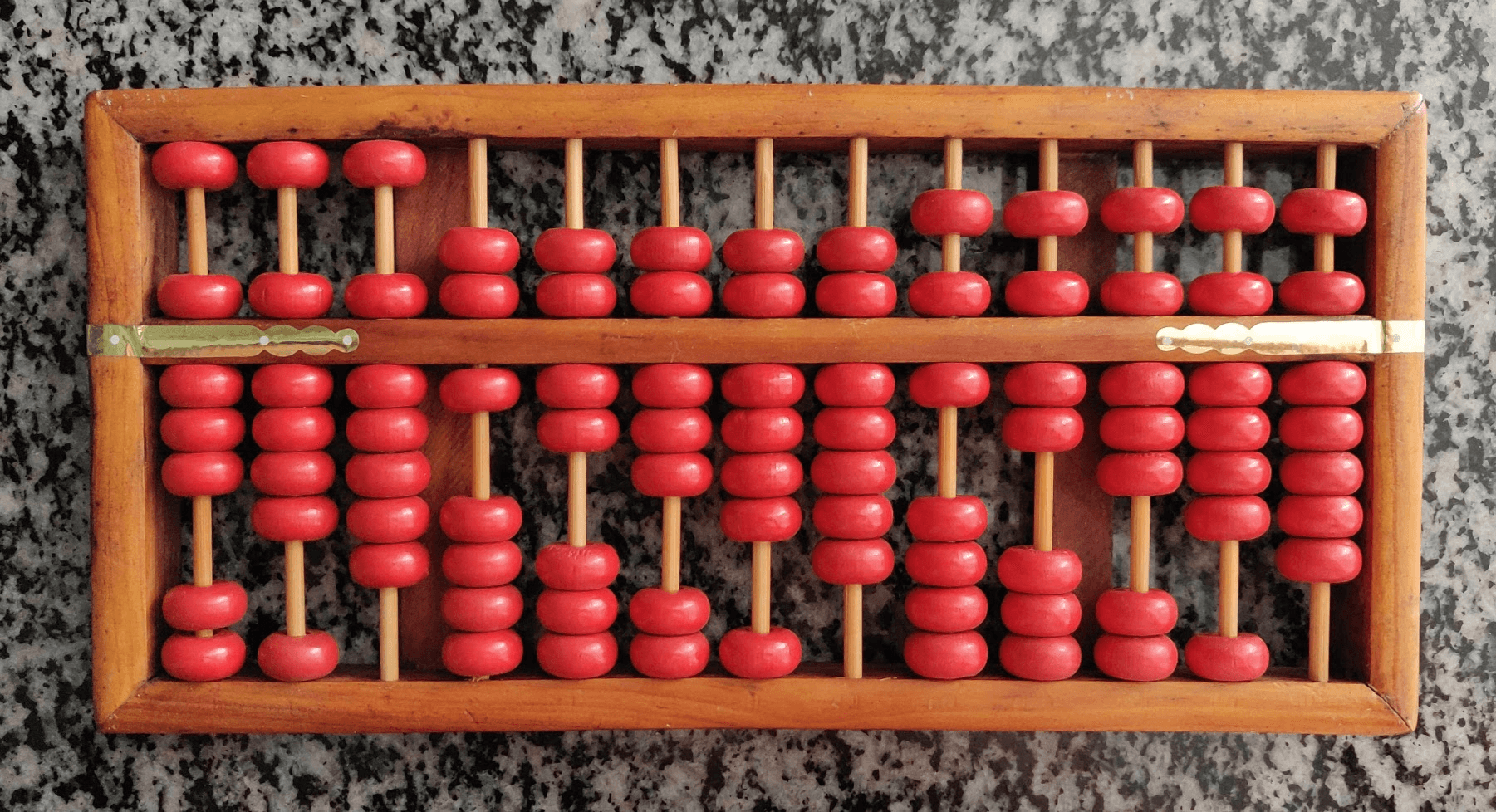
Abacus
~2700 BCE
The first known calculating tool, using beads on rods to represent numbers and perform basic arithmetic.
2. Modern hardware components
The Building Blocks of a PC
Every modern computer whether a desktop, laptop, or server consists of specialized components working together. Each part has a specific job, and they communicate through the motherboard's circuitry.
The CPU (Central Processing Unit) is the brain, executing instructions from programs. The RAM (Random Access Memory) provides fast, temporary storage for data the CPU needs right now. Storage devices (SSDs or hard drives) hold files permanently, even when powered off.
The motherboard connects everything together, providing pathways for data to travel between components. The GPU (Graphics Processing Unit) handles rendering images and video and increasingly, complex AI computations. The power supply converts electricity from your wall outlet into the voltages each component needs.
Understanding these components helps you make informed decisions when buying or upgrading a computer. Want faster program loading? Upgrade your storage to an SSD. Need better gaming performance? Invest in a stronger GPU. More multitasking? Add RAM.
3. Hardware-software bridge
Binary: The Language of Hardware
How does software written in Python, JavaScript, or C++ actually control physical hardware? The answer is binary: the fundamental language of computers.
At the lowest level, computers work with electricity. Transistors inside the CPU act as tiny switches, either allowing current to flow (representing 1) or blocking it (representing 0). Every piece of data numbers, text, images, videos, programs is ultimately stored and processed as sequences of these 1s and 0s.
Modern CPUs contain billions of transistors, switching on and off billions of times per second. Groups of transistors form logic gates, which combine to create arithmetic units, memory cells, and control circuits. When you run a program, you're essentially orchestrating billions of electrical signals flowing through microscopic pathways.
Machine code the raw binary instructions a CPU understands directly controls this hardware. Each instruction tells the CPU to perform a specific operation: load data from memory, add two numbers, compare values, jump to a different instruction, and so on.
| Layer | Example | Description |
|---|---|---|
| High-level Code | x = 5 + 3 | Human-readable programming language |
| Assembly | ADD R1, R2 | Low-level mnemonics for CPU instructions |
| Machine Code | 10110001 | Binary instructions the CPU executes |
| Electrical Signals | 5V / 0V | Physical voltages in transistors |
4. Code to circuits
How Software Becomes Hardware Operations
Let's trace the journey of a simple program from the code you write all the way down to the electrical signals flowing through the CPU. This transformation happens in multiple stages, each translating the code into a lower-level representation.
When you write code in a high-level language like Python, you're using human-friendly syntax. The Python interpreter first compiles your code into bytecodean intermediate representation that's easier for the computer to process but still platform-independent.
This bytecode then gets translated into assembly language, which uses short mnemonics (like MOV, ADD, CALL) that correspond to specific CPU instructions. Finally, the assembler converts assembly into machine code the actual binary that the CPU executes.
Inside the CPU, the fetch-decode-execute cycle runs continuously. The CPU fetches an instruction from memory, decodes what operation it represents, executes that operation using its arithmetic logic unit (ALU), and stores the result. This cycle repeats billions of times per second, bringing your program to life.
Python Code
High-level code written by humans using readable syntax. Python handles memory management, typing, and other low-level details automatically.
print("Hello, World!")This multi-layer abstraction is what makes modern programming possible. You can write print("Hello, World!") without thinking about memory addresses, register allocation, or instruction opcodes. Each layer handles complexity so the layers above can focus on solving problems instead of managing hardware details.
Yet understanding these layers helps you write better code. When you know that every variable access requires memory reads, that function calls involve stack operations, and that loops generate repeated instructions, you can make smarter decisions about performance and optimization.